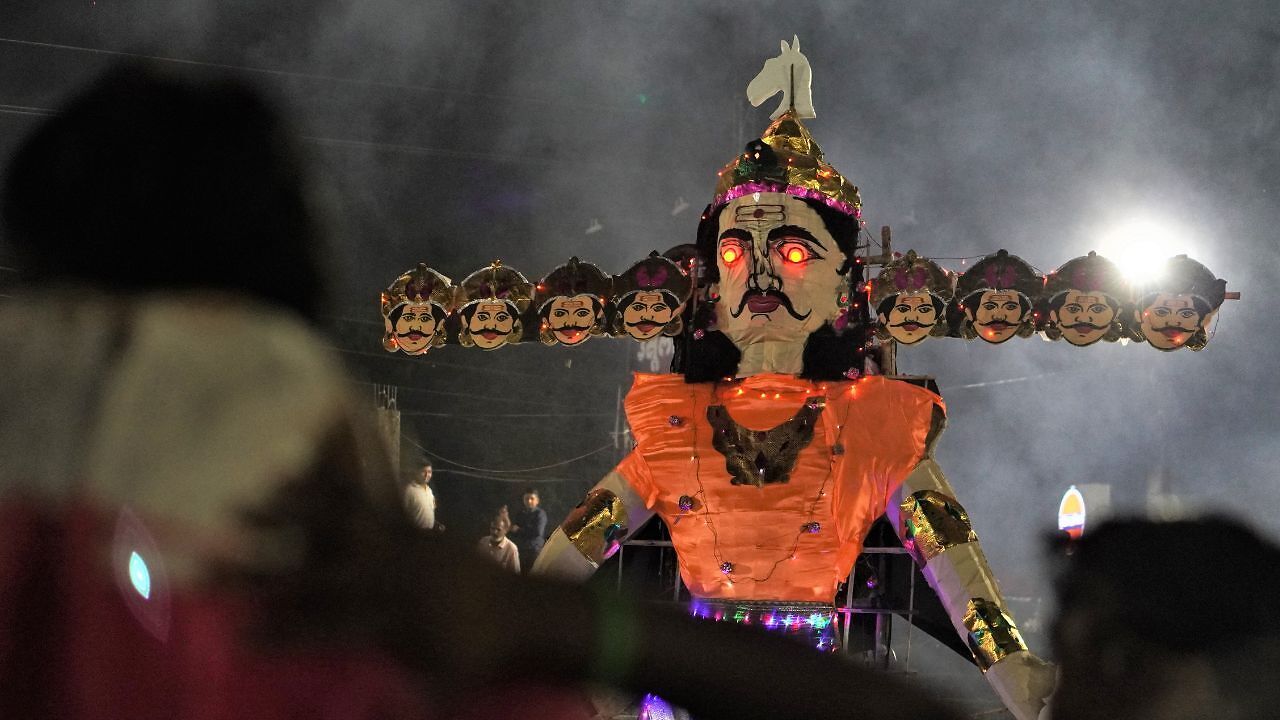
File photo of Dussehra. (Image: Canva)
\n\nAcross most of India, Dussehra ends with Ravana’s effigy going up in flames. The crowds go home and the season moves on to Diwali. In Kullu, a town on the Beas river in Himachal Pradesh, that is when the festival begins.
\n\nKullu Dussehra traditionally starts on Vijayadashami and runs for seven days at Dhalpur Maidan, the big open ground in the heart of town. This year, Dussehra falls on October 20, but Kullu will begin a day later, on October 21, following the Udaya Tithi tradition. The festival ends on October 27. Governor Kavinder Gupta will open it, and Chief Minister Sukhvinder Singh Sukhu will attend the final day.
\n\nThere is no Ramlila here and no burning of giant effigies. Kullu Dussehra is a gathering of gods. Each village deity, usually a set of silver and brass faces called mohras fixed on a decorated palanquin, is carried to Dhalpur on the shoulders of villagers, often on foot over several days. Kuikanda Nag, for instance, left Nither in Outer Seraj on October 18 to reach Dhalpur on the 21st. More than 300 deities came last year.
\n\nThe festival cannot start until Hidimba Devi arrives from…
Original source: https://www.timesnownews.com/lifestyle