Aditi Rao Hydari Shows You How to Wear a Gharara and Choga This Festive Season
- Written by: Namya Sinha
- Updated Aug 17, 2026, 10:16 IST
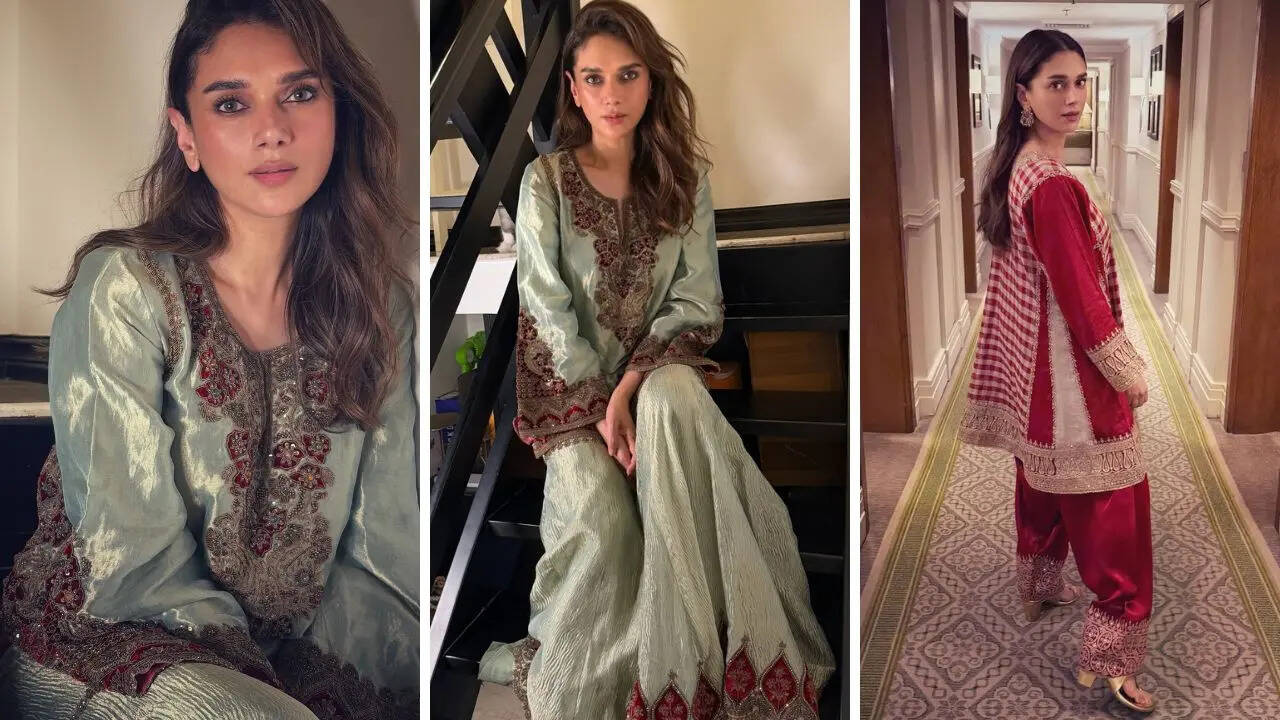
Aditi Rao Hydari serves up two dreamy festive looks, giving you plenty to bookmark before the celebrations begin, from an intricately embroidered gharara to a rich red choga.
Aditi Rao Hydari (Photos: Instagram/@aditiraohydari)
There is something about Aditi Rao Hydari that makes her look effortlessly at home in ethnic wear. From delicate shararas to old-world ghararas, the actor has a way of making traditional silhouettes feel dreamy, ethereal and completely of the moment. In her latest photo dump, Aditi was seen in two looks that the girlies will want to bookmark ahead of the upcoming festive season.
In her first look, Aditi was spotted wearing a sage-coloured gharara in silk tissue, featuring intricate hand embroidery, dabka and jaal work by designer Preeti Kler. The look brings together a comfort-oriented design with couture-level detailing. The dash of maroon, paired with the gold embroidery, adds a punch of colour and freshness to the entire look without taking away from the muted beauty of the sage base.
The gharara has a fascinating history rooted in the fashion of 19th-century Awadh. It was traditionally worn by Muslim aristocratic families in the region and eventually became closely associated with weddings, celebrations and festive dressing. As historian Rana Safvi writes, the gharara “consists of a kurti (a short, mid-thigh length tunic), a dupatta (veil), and most importantly, a pair of wide-legged pants, ruched at the knee so they flare out dramatically.”
The construction of the gharara is what gives the silhouette its distinctive shape. The knee area, called the gote in Urdu, is often elaborately embroidered with zari and zardozi work. According to Safvi, each leg of a traditional gharara could be made from more than 12 metres of fabric, making it as much a feat of craftsmanship as a fashion statement.
She also notes that the upper part of the gharara is known as the paat or kunda, while the two sections are separated by a piece of cloth called the rumaali or miyaani. On top sits the nefa, which would be used with a kamarband to hold the garment in place.
By the 19th century, the gharara had largely evolved into a festive and wedding garment. But only the nobility could afford to wear one. Today, the silhouette has made its way back into the fashion conversation, with designers reworking it through lighter fabrics, contemporary embroidery and updated proportions.
In modern fashion terminology, the words gharara and sharara are often used interchangeably, but one must know that they are different. A gharara is fitted through the upper portion of the leg before dramatically flaring out from the knee, while a sharara typically flares from the waist or hips. The distinction might seem subtle, but it completely changes the way the two silhouettes fall and move.
Aditi’s second look took a more dramatic turn. The actor was spotted wearing a red tissue Ghingham Choga by Heena Kochhar, paired with red mashroo salwar. The choga featured intricate zari, sitara and ari embroidery, giving the monochromatic red ensemble a rich, layered finish.
Where the first look leaned into soft sage and understated glamour, the second was all about colour, texture and old-school grandeur. The tissue fabric gives the choga an almost translucent lightness, while the embroidery adds the kind of festive drama that makes a statement without needing much else.
Together, the two looks offer a lesson in how to approach ethnic dressing this festive season. One is muted, romantic and quietly ornate, while the other goes full colour with a rich red palette and intricate craftsmanship. Both, however, have that distinctly Aditi Rao Hydari quality: regal without looking too studied, traditional without feeling dated, and just dreamy enough to make you want to recreate the entire look.
Latest News


Namya is a seasoned journalist with nearly two decades of experience. A graduate of Miranda House, Delhi University, and Boston University’s College o… View More
Original source: https://www.timesnownews.com/lifestyle